
No Pasa Nada
By Hannah F.
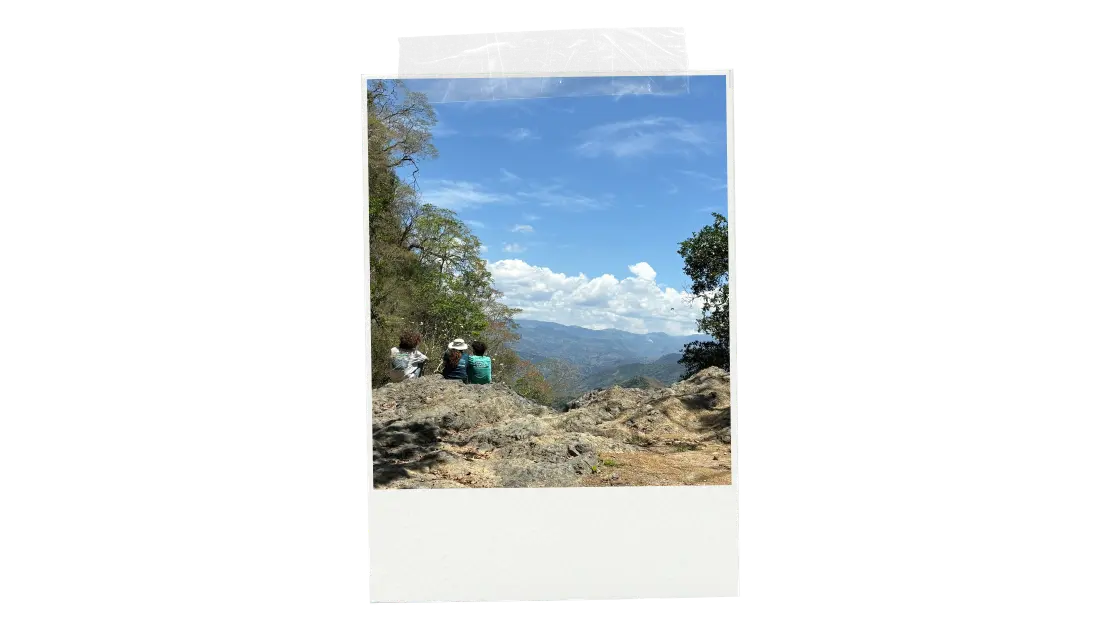 One phrase I keep hearing here is “no pasa nada.” At first I didn’t think much of it – just that it meant “it’s okay,” “don’t worry.” But the longer I’ve been here, the more I’ve started to notice it in everyday situations.
It usually comes up when something small goes wrong – a mistake, a mix-up, something a bit embarrassing. The kind of thing I’d probably overthink at home.
Living in another language gives you plenty of chances to get things wrong. I’ve mixed up words more times than I can count – caballo instead of cabello, mono instead of mano – and only realise when people start laughing. At the start, it made me feel a bit silly. Now it just feels like part of it. People laugh, you laugh, and that’s it – no pasa nada.
Some moments have stayed with me more than others. One day I fell asleep on the bus and missed my stop. I only woke up once we’d already stopped – even though I hadn’t pressed the button, the driver knew me by then and stopped anyway to check if I was getting off. We both just laughed. It was such a small thing, but it felt like one of those “no pasa nada” moments.
At the beginning, I don’t think I really believed it. Even if someone said it to me, I’d still feel bad or embarrassed. But hearing it so often – and actually seeing it in how people react – has started to sink in. It feels more like a reminder that there’s no need to get caught up in things.
What stands out to me is that difference in mindset. It’s not about everything going right, but more about how people respond when it doesn’t.
There’s another phrase I’ve heard a lot too: “todo pasa” – “everything passes.” I noticed it most when I was ill recently. My host family kept checking in and would say it – todo pasa. It was simple, but reassuring, and made everything feel a bit lighter in the moment.
In a way, the two phrases have opposite meanings when translated, but they’ve both shaped how I see those moments. No pasa nada reminds me not to get caught up in small things, and todo pasa reminds me that even the harder moments won’t last forever.
They’re simple phrases, but they feel genuine here – something you see in how people act.
It’s something I want to take with me. Not hold onto things so tightly. And remind myself, when I need it, that sometimes no pasa nada – and todo pasa.


