 Log In


Bridge Year Costa Rica – Fall 2025
Band-Aids on a Broken System
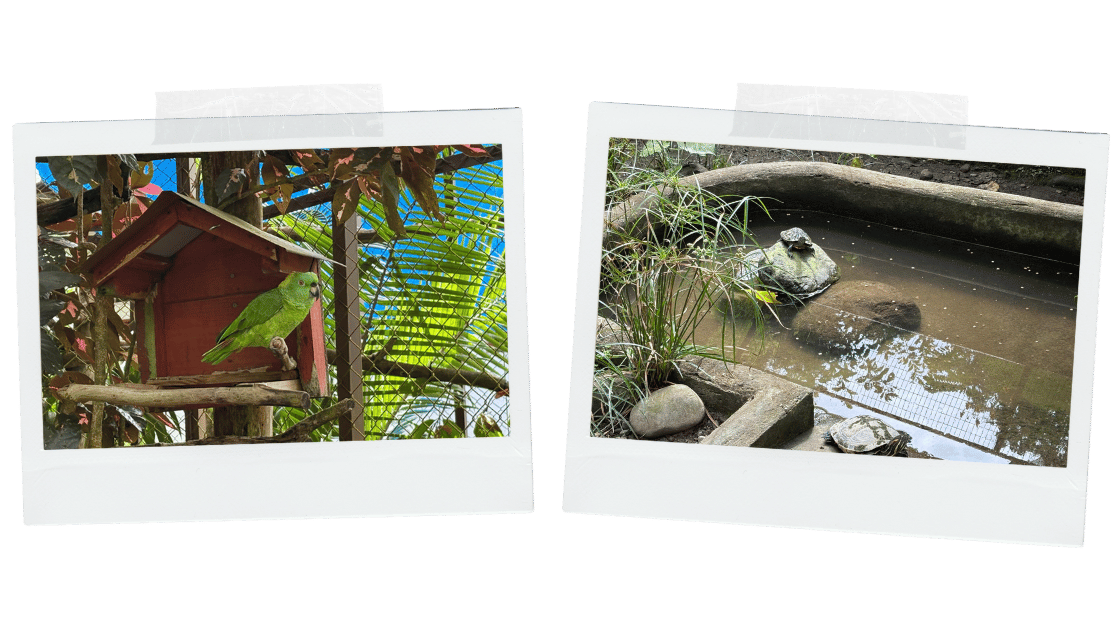 In one of the photos attached, you will find Chester, the spider monkey, with his orangish-red body and long black limbs. Chester was, by far, my favorite of the animals we saw at the Alturas Wildlife Sanctuary on December 15th. At the top left of the photo, you can see that he has a patch of rough skin on his tail, which he is using to cling to the wire mesh fencing. This patch of skin can feel and grip things similarly to how their hands and feet function—which is pretty neat, I think. They also lost their thumbs to natural selection, which aids in quicker movement through the trees.
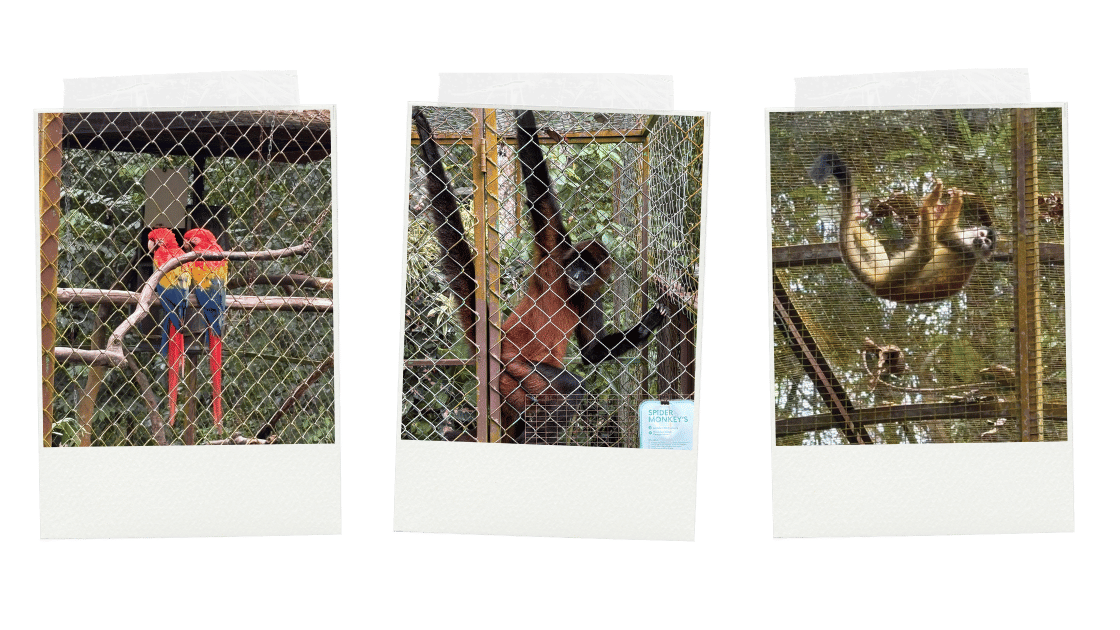
In addition to Chester, we saw a greater variety of monkeys, parrots, some turtles, a crocodile, and a bunch of other critters, each with a unique story about how they ended up there, which added to the memorability of the whole experience. Amidst these stories, there was a consistent theme that ran tandem to the sanctuary’s overall mission: oftentimes, wildlife is displaced, injured, or orphaned because of irresponsible human interaction—whether due to the unconscientious feeding of unhealthy foods, or smuggling for a pet trade that causes imprinting and hinders reintroduction into the wild. Wildlife sanctuaries like Alturas, endangered species protections, and other ecological regeneration programs are necessary to minimize the harm that modern human society causes, but they are imperfect solutions acting as band-aids to cover a wound without properly treating the root of the flawed system. It is also apparent that although we recognize the harm we cause to animals through feeding them unhealthy, highly processed foods, we still choose to consume those foods ourselves. Our society encourages the mass production of unhealthy foods to maximize profit for the producers, rather than maximizing the health of communities, individuals, and ecosystems as a whole.
Our faults do not stem from any one person, but are rather a natural evolution of our systemic models over an elongated period of time. We cannot completely blame individuals ignorant of the dietary needs of animals, and that feeding them can inadvertently create a human dependency, when most education systems produce this widespread ignorance in the first place. Remediation will require incorporating lessons on environmentally conscious behavior into general education, solidifying sustainable practices from a young age, rather than instituting reactive mechanisms for this ignorant yet still harmful behavior. The same applies to large-scale food production: current society prioritizes manufacturing the cheapest food, rather than healthy, rich, and filling options, even if this results in serious health risks for consumers. The solution is to dramatically shift the economic architecture that makes unhealthy food cheaper, to one that makes natural, minimally processed food the most economically advantageous for producers and buyers. This same strategy should also be employed for energy production and use, so that all ethically positive practices become the most economically incentivised course of action; economics and morality should not contradict one another, but instead, economics should encourage a sense of care for one another and our environments, while maintaining profitability.
 Our nature reserves and wildlife sanctuaries are important methods of artificial protection that are built upon an unsustainable system—our current impact would destroy many ecosystems and species if natural selection were allowed to occur. They prevent environmental collapse and stand to steward a healthy relationship with nature. However, these methods of preservation are akin to swimming against the societal current, and they take significantly more energy and produce less effective results than if we were to carve a completely new path forward. A new system built fundamentally upon collaboration between nature and humanity would allow us to swim with the current of natural selection, since such a model would naturally produce sustainable results. We wouldn’t need to heavily maintain a dying biosphere through artificially enforced mechanisms since our trajectory would naturally point towards ecological flourishing. If we choose to build with nature, rather than opposed to it, we will witness a great prosperity that heightens not just excitement in the natural world, but human prosperity as a whole.
