 Log In


Bridge Year Costa Rica – Spring 2026
Cusingos Conversations
By Mayo
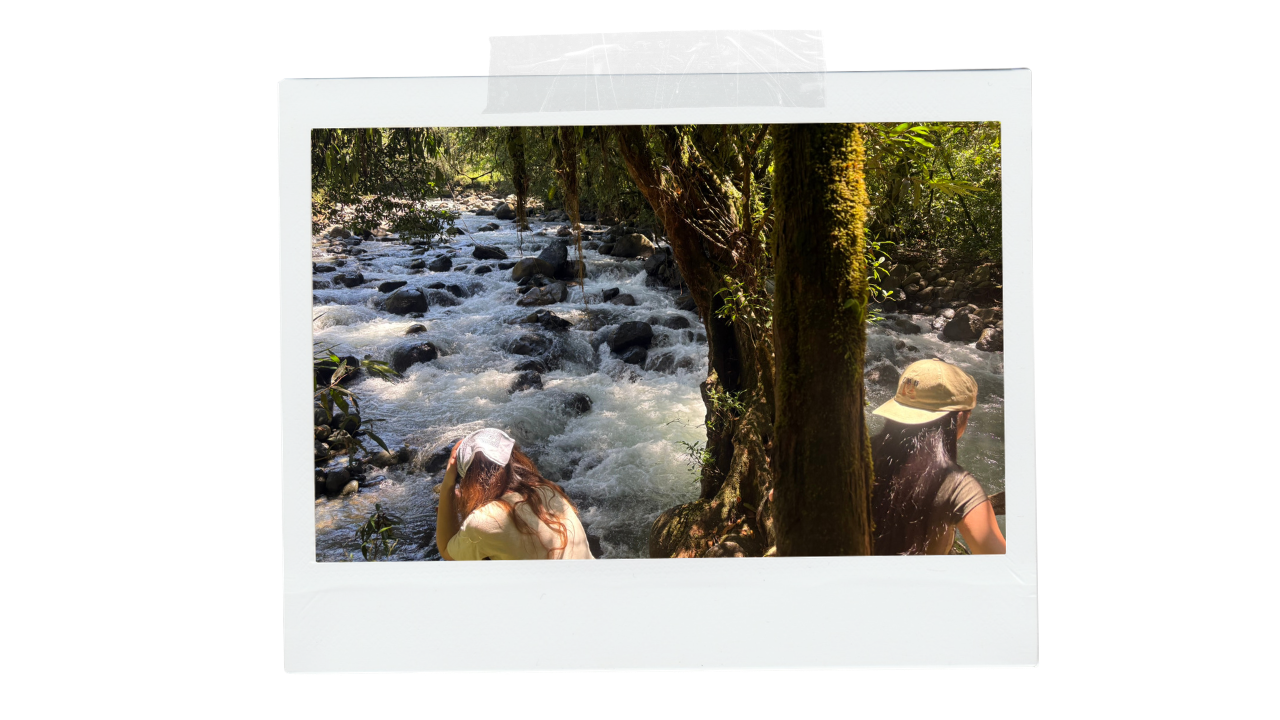 Most people I wrote about in this blog will never know it exists. A lot of them probably don’t remember the girl from California who they chatted to, a tiny part of their visit to the Alexander Skutch Bird Refuge “Los Cusingos.” I’m the figure who told them about the reserve at the reception, the intern who showed them around the house museum, the person they walked the trails with, the student they were curious about. Some will remember my face but not my name, others my words but not my smile, and yet others will have no recollection at all.
But I remember them. I’ve meticulously kept track of almost every visitor I’ve had a conversation with during my time here. Scattered throughout my spreadsheet of hours worked (almost 600 by this point) are little notes and comments—some consisting of one word, others of paragraphs—that prompt my memory of who I talked to those days, whether the conversations happened in the pouring rain or under the warm sun or in the slightly cooler shade.
It’s odd to see how more than six months’ of moments can be written in so few words. I’ve expanded the notes here, but it’s still quite short. As you read, observe how quickly the days pass—can you see time fluttering her wings, faster and faster until suddenly, you’re at the end?
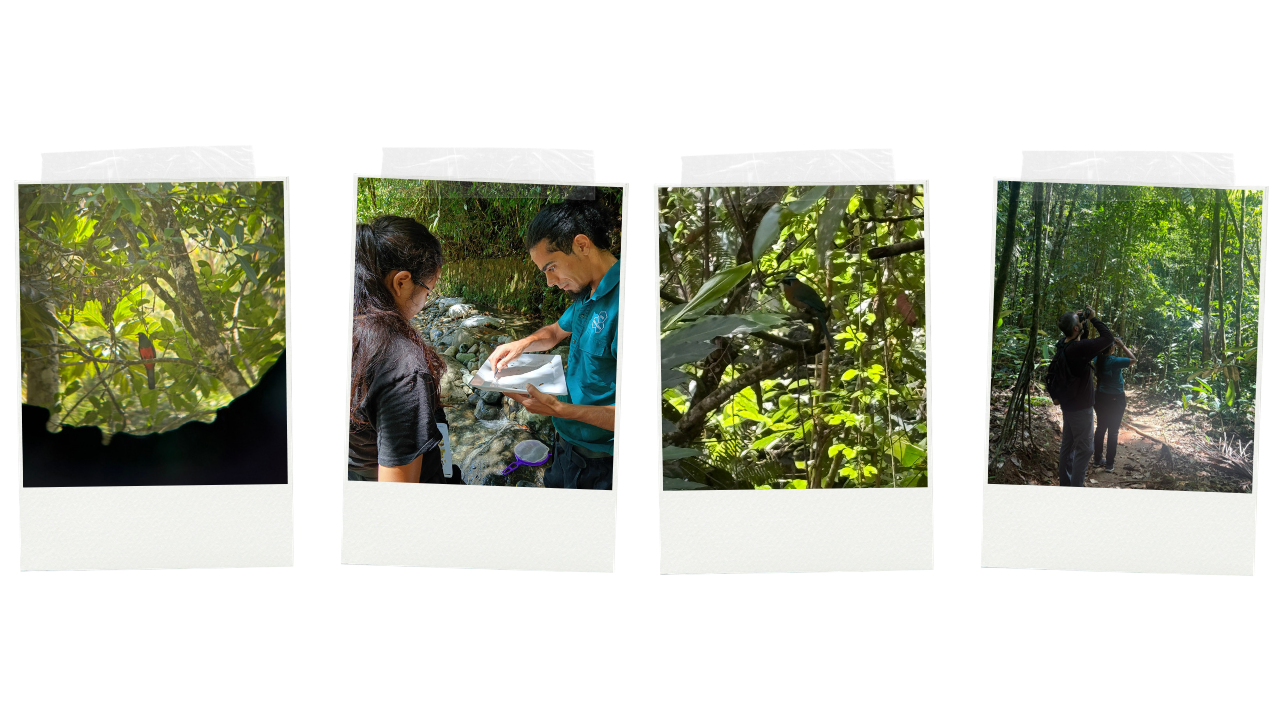 October 2nd, 15th, and 22nd: I talk to visitors on three separate occasions during this month, but haven’t had the thought to keep track of exactly who they are yet. My Spanish isn’t that good yet, so they’re most likely foreigners who speak English.
November 12th: Representatives from Princeton are visiting the group this week, and today is their Cusingos day! There’s a bit of a panic in the office, since we had a bit of miscommunication… I explain my service project (in Spanish, yay!) and show them around the house museum, armed with the knowledge of Alexander Skutch I’ve amassed over the past few months. They seem to enjoy it, so I’m glad.
November 14th & 20th: I have no details recorded, but I did talk to visitors! I wonder what we talked about…
November 25th: A local technico (a technical high school) visits Cusingos, students pouring out of the bus in their light blue uniforms. We have presentations about the reserve and museum tours happening simultaneously, and later I hike with a group of students along the trails.
December 2nd: This kind-of-not-really counts, but we receive a guest from SINAC (the Costa Rican national governing organization for protected sites) along with two two-toed sloths and one porcupine! It’s the first time I’ve seen any of these animals. Cusingos works with SINAC in order to provide a protected space to relocate animals found too close to urban areas.
December 8th: I chat with some birders from the States. By this point, I’ve learned a lot more about birds (Merlin has become a very handy app on my phone for bird identification), but there is still so much to learn. Funny coincidence: I see my first Bay-headed Tanager that day!
December 10th: I meet a couple of visitors from Canada. That’s all my notes say, but I spent about an hour talking to them, so it must have been a good conversation!
December 11th: I talk to some Germans! The family is talking about seeing a massive terciopelo (a certain kind of pit viper in Costa Rica, widely known for its venomous bites). A good opportunity to practice my high school German, although I quickly see that my Spanish has really messed it up…
December 22nd: Lena (my cohort-mate) and her boyfriend Ryan visit! I take them on a full tour of the museum and the trails, and we have a really nice time exploring the reserve. I’m chatting about the different trees, flowers, and processes I’ve learned about while doing my service project (which is about creating informative signs with accessible information about these things)
January 8th: I meet a professor from Washington University in St. Louis! He’s here with his son and his former grad student, doing a massive ten day birding expedition in Costa Rica. They listed the places they’ve gone to (literally hitting places over the entire country) and I’m nodding along like I know what they’re saying. Their car is overflowing with birding equipment—scopes, binoculars, cameras… We chat about what I’m doing here, what they’re doing here, and try to figure out if we know anyone in common. He teaches public health and the intersection between the environment, economics, and entrepreneurship, but he also loves ornithology and birding and has written books on birds—it’s extremely important to not be forced to only do one thing for the rest of your life, he stresses. I have his phone number and an invitation to go birding in Missouri. (On another note, I also meet three folks from Québec—only one speaks English, but it’s enough to give them the introduction to the reserve.)
January 14th: I talk with two couples today—one from Canada and one from Switzerland! I encounter the Canadians while out in the garden and give them a little tour of the house museum (Dr. Alexander Skutch & Pamela Lankaster’s house, built in the 1970s). Later, we grab lunch together and they tell me about the mountains of snow they have at home in Canada—Costa Rica is their much-needed break from the cold! But their eyes light up when they talk about the skiing and skating and all the winter things from back home, so I’m sure that they’ll be looking forward to being back, too.
The Swiss couple (from the German-speaking part of Switzerland) viscerally remind me of how much German I’ve forgotten in the past few months. I text Lena, since I know she’ll be excited! (Lena grew up in Switzerland, for the most part, and we practice German together when we can. I resolve to practice more.)
January 15th: I chat with Owen from New York, who has the strongest New York accent I’ve ever heard. He’s actually in a similar position to me—he’s set to do research & field work at an environmental protection organization in San Vito (another part of Costa Rica) that does environmental education and preservation work, with a special focus on birds! I wish him luck as he heads into the forest, loaded up with a camera and some binoculars.
February 2nd: More Germans! My German level is definitely going down as my Spanish level goes up… I give them a tour of the house museum in English.
February 4th: A couple from Georgia (the state, not the country) visit Cusingos. We have a nice conversation about what they’re doing and what I’m doing in Costa Rica!
February 18th: There are about 35 teenagers from Québec here from an international exchange program! They all speak French and some speak English; I’m feeling out of my depth here. We do the presentations, show them the museum, and split them into two groups for the trails. My supervisor and I take one group while my coworker takes the other, and I give them a walking tour.
February 19th: I’m out trying to get more photos of a Monstera seedling for my service project when I encounter a couple from the US! They have a home near Los Gigantes, one of my favorite hikes in the area, and we have a nice chat about birds and plants. I try to help them find some birds on the trail.
February 23rd: A crazy day: there’s a second set of Québécois teenagers from the same organization visiting, and this time, I take a group out by myself on the trails. While the students are listening to the presentation, though, I’m at the reception and welcome two sound-trapping birders from the States, Rose Ann and Richard, to the reserve! They’re loaded up with large cone-shaped sound recording equipment, cameras, and binoculars. These are probably the most experienced birders I’ve ever met—Rose Ann was one of the founders of FieldGuides, one of the largest bird tour organizations, and the couple have been the guides on hundreds of tours around the world (tours built for birders to travel on). Plus, they knew Alexander Skutch (in fact, a friend of theirs had stayed in Los Cusingos and edited one of Skutch’s manuscripts! What legends to meet. After the hike with the Québécois, I welcome two other people from the US to the reserve, who somehow figure out a distant connection with the pair of expert birders and chat about all the birding they’ve been up to! It’s so cool to listen to them recount so many of the experiences they’ve had.
February 25th: Another multi-group day—I talk to some birders from Slovenia who ask about the most active area in the reserve, and have a really nice conversation with Carol from Minnesota who decided to come back to the reception early and wait for her tour group to finish the hike! We talk about everything from job applications to public health and her life to university to the current state of the United States, and when she leaves, she gives me a hug. I smile and wave as the tour bus heads out.
March 2nd: I see my second trogon (a Slaty-Tailed) when I’m out birding with my supervisor and a visitor from Green Bay, Wisconsin! The birds are reasonably plentiful today, although I did forget my binoculars at home.
March 3rd: A pair of artist/builder friends come to Cusingos because they heard from a mutual acquaintance that I’d be able to talk to them about gap years in Costa Rica! One has a daughter just about to finish high school, and so I’m able to give them some advice as to what I’ve done. But we don’t just chat about gap years—Howie, Bianca, and I have a really interesting conversation spanning art, nature, conservation, artist guilt, books, permeability of a house, and utopia bending and its connection to the weather/ambient temperature of a region. I have to leave to catch my bus, but they head out into the forest, discussing who knows what (something interesting, for sure).
March 4th: Owen from my cohort (not New York Owen from January) comes to visit Cusingos with his friend Gabe, who’s visiting for the next few days. I’ve met Gabe on the phone—he’s been the main voice Owen chats with when he’s writing our D&D sessions—but never in person, and I’m super excited because Gabe is also a birder. He calls himself a fake birder, but then, so am I, so we laugh and keep Merlin up on our phones, ready to identify whatever birdsong it hears. It’s one of those conversations that has so many twists and turns that I don’t remember the random topics we talked about, but that I recall fully enjoying.
March 11th: Another Princeton visit! My Spanish has improved since the last one in November—my accent is leaning more Costa Rican rather than just “American learning Spanish.” We do the full hiking loop, too: a professor of Spanish and Portuguese is here, and she’s interested in seeing the petroglyphs we have at the far end of the trails. It’s a slightly different flavor from the first visit, but still familiar.
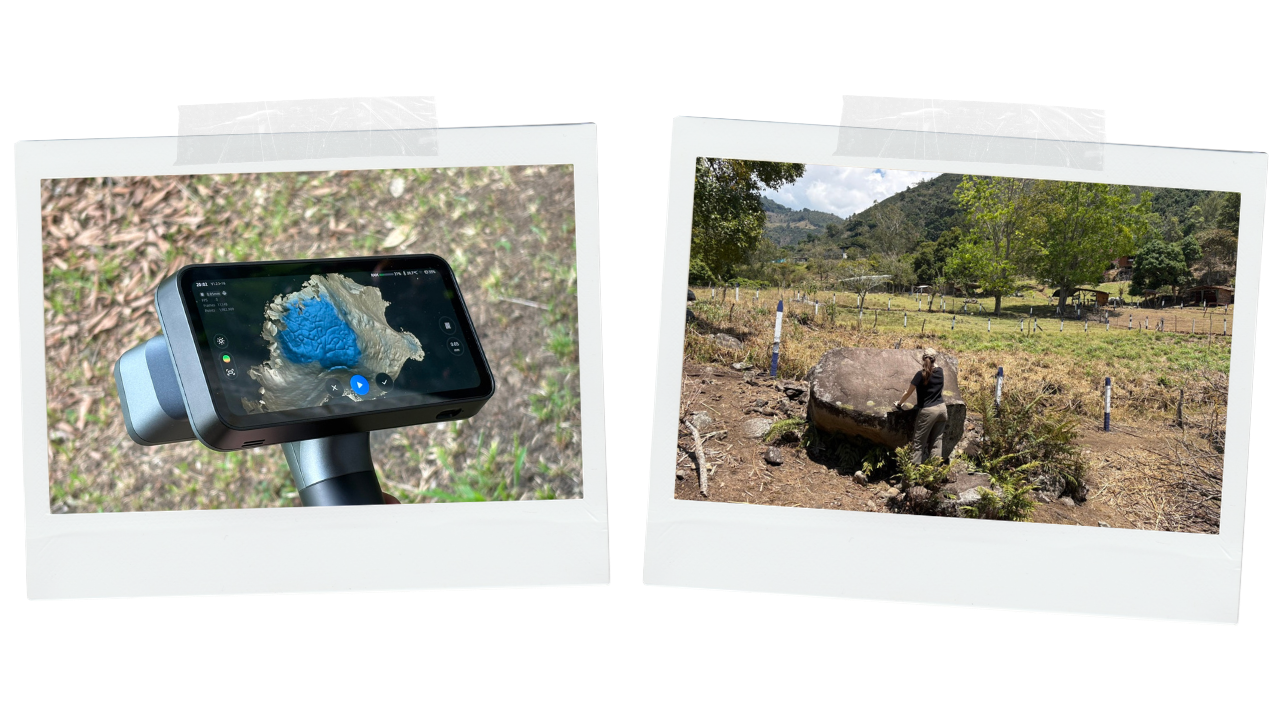 March 18th: This is one of my favorite, favorite days I’ve spent at Cusingos. An archaeologist visits!!! I’m over the moon. (I could write so much about this day, but this blog is getting too long already, so I’ll do my best to keep it short.) When Kim, the archaeologist, arrives, my coworker tells her that I speak German, and we converse for a quarter of an hour. She tells me about her research—she’s an Oxford postdoc specializing in large-scale pre-Columbian stoneworking in Costa Rica, specifically in how their spatial location and production relates to knowing about how different communities traveled the landscape centuries ago. She and my coworkers invite me to accompany them to go visit some petroglyphs in the area, and I say yes immediately. What a cool experience! Her scanner combines infrared, laser, and photography to create elaborate three-dimensional models of the markings on the stones, picking up details that the human eye can barely recognize. These petroglyphs will be added to the Costa Rican National Museum database, helping to expand her and other researchers’ knowledge about the placement and significance of various sites in the country. I spend the day in awe. It’s an absolute highlight of what life can bring you—chance encounters with people and fields you never would have imagined.
That’s all for now! Thanks for reading!
