 Log In


Bridge Year Costa Rica – Spring 2026
Thank You Letter To My Host Family
By Lena H.
“Lena, I think your host dad is here,” Alain whispered in my ear. Our orientation week had gone by so quickly. Today was our final day in Fudebiol and our first day with our host families.
No one else’s family had arrived yet; mine was the first one. The clouds moved leisurely in the sky this afternoon, painting the floor with brushstroke-shaped shadows. I stared at the changing patterns, making no effort to move and reveal myself to my new family.
What can I even say to them? Three years of high school Spanish was only useful to me if anyone was confused about specific grammatical rules and their mountain of exceptions, not for a conversation in the real world with real people.
And a family? I haven’t lived with a family for more than two months in years. I am used to living by myself. Do they expect me to engage with them all the time or not at all?
However, I couldn’t stay glued to my seat forever.
~~~
Slowly I started to settle in my new home, with my new family, in a new language. I created a mini routine, trying to find clarity in what felt like a very murky new life.
I just didn’t understand what to do, especially not with my host family. Was I friendly enough? Were they tired of my confusion and questions about Spanish? Was I spending enough time with them? I tried hanging out with them when I could, and it usually went silently watching the news while I crocheted. I felt like what I was doing was wrong.
What added fuel to the fire was that all my friends around me, it seemed, connected much quicker to their host families, all having stories about fun activities they were doing or how much they talked about last night. My evenings didn’t seem like that at all. I felt like I wasn’t doing enough. Like I wasn’t bubbly enough or open enough. Like all my worries were true.
I just wanted them to like me. I wanted to feel a part of the family.
~~~
Eventually, the more Spanish I learned, the more I could speak and understand, and the more time I was actually engaging with my family. I also found other ways to communicate: While watching TV, I was secretly making gifts for them, noting their different interests. I made a scarf with the colors of my host dad’s (Johnny) favorite soccer team. Viva Saprissa! Then, I made flowers with my host mum’s (Lidia) favorite color, purple, because she likes to decorate the house.
The beginning of our real host family relationship was, I think, when Lidia asked me if I could teach her crochet. I went home early, cancelling plans with friends that day to make sure we would have enough time to crochet before we went to bed. Clutching the newly bought purple crochet needle and purple yarn with sweaty palms, I returned home.
After that, we would spend time crocheting together and I didn’t feel like I was intruding on their lives.
~~~
Looking back on the first couple of months with my host family, I realized that most of my worries were most definitely self-made. My host family had been hosting for more time than I have been alive for, and didn’t have expectations for me other than to be polite and engage with them like I was doing.
I also realize that I didn’t have to be more bubbly, more agreeable, or more of anything. I connected with my host family doing what I liked doing. Not just through crochet, but also through my opinions and my stories. When I finally started talking about my days and making jokes that I might have not made before, partly due to the language barrier, but also because I was scared they wouldn’t find them funny, Lidia started sitting with me during dinner and breakfast even if she had already eaten.
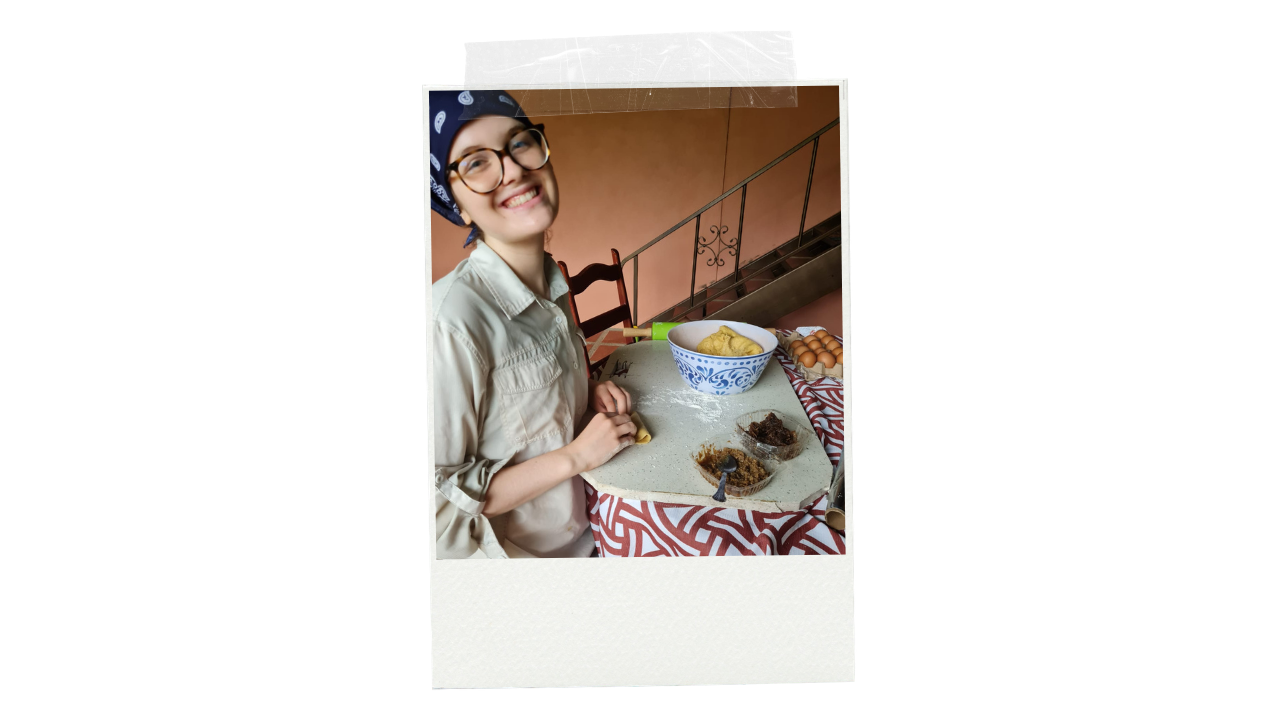
When I started bringing the sweets I baked with my friends in casa puente, instead of being scared of what they thought about what I’ve made, we started talking about different recipes, and Lidia gave me a cook book that she made with the other women in the town we live in.
De: Lena, Para: su familia de Costa Rica.
I want to thank my host family for waiting for me to come out of my shell and receiving me for who I am when I did.
Carta de agradecimiento para mi familia anfitriona
—Lena, creo que tu padre anfitrión está aquí —me susurró Alain al oído. Nuestra semana de orientación había pasado volando. Hoy era nuestro último día en Fudebiol y nuestro primer día con nuestras familias anfitrionas.
Aún no había llegado la familia de nadie más; la mía era la primera. Las nubes se desplazaban tranquilamente por el cielo esta tarde, pintando el suelo con sombras que parecían pinceladas. Me quedé mirando los patrones cambiantes, sin hacer ningún esfuerzo por moverme y revelarme ante mi nueva familia.
¿Qué puedo decirles siquiera? Tres años de español en el colegio solo me servían si alguien tenía dudas sobre reglas gramaticales específicas y su montón de excepciones, no para una conversación en el mundo real con personas reales.
¿Y una familia? No he vivido con una familia durante más de dos meses en años. Estoy acostumbrada a vivir sola. ¿Esperan que interactúe con ellos todo el tiempo o que no lo haga en absoluto?
Sin embargo, no podía quedarme pegada a mi asiento para siempre.
~~~
Poco a poco empecé a adaptarme a mi nuevo hogar, con mi nueva familia, en un nuevo idioma. Me creé una pequeña rutina, tratando de encontrar algo de claridad en lo que me parecía una nueva vida muy confusa.
Simplemente no sabía qué hacer, sobre todo con mi familia anfitriona. ¿Era lo suficientemente simpática? ¿Estaban cansados de mi confusión y de mis preguntas sobre el español? ¿Pasaba suficiente tiempo con ellos? Intentaba pasar tiempo con ellos cuando podía, y normalmente acabábamos viendo las noticias en silencio mientras yo tejía. Sentía que lo que estaba haciendo estaba mal.
Lo que echaba más leña al fuego era que, al parecer, todos mis amigos a mi alrededor conectaban mucho más rápido con sus familias anfitriona, y todos tenían historias que contar sobre actividades divertidas que estaban haciendo o de lo mucho que habían hablado la noche anterior. Mis tardes no se parecían en nada a eso. Sentía que no estaba haciendo lo suficiente. Como si no fuera lo suficientemente alegre o abierta. Como si todas mis preocupaciones fueran ciertas.
Solo quería caerles bien. Quería sentirme parte de la familia.
~~~
Con el tiempo, cuanto más español aprendía, más podía hablar y entender, y más tiempo pasaba realmente interactuando con mi familia. También descubrí otras formas de comunicarme: mientras veíamos la tele, les preparaba regalos en secreto, tomando nota de sus diferentes intereses. Hice una bufanda con los colores del equipo de fútbol favorito de mi padre anfitrión (Johnny). ¡Viva el Saprissa! Luego, hice flores con el color favorito de mi madre anfitriona (Lidia), el morado, porque a ella le gusta decorar la casa.
Creo que el comienzo de nuestra verdadera relación como familia anfitriona fue cuando Lidia me preguntó si podía enseñarle a tejer. Ese día volví a casa temprano, cancelando mis planes con los amigos para asegurarme de que tuviéramos tiempo suficiente para tejer antes de irnos a dormir. Aferrándome con las manos sudorosas a la aguja morada y al hilo morado, recién compradas, volví a casa.
A partir de entonces, pasábamos tiempo tejiendo juntas y ya no sentía que estuviera entrometiéndome en sus vidas.
~~~
Al echar la vista atrás a los primeros meses con mi familia anfitriona, me di cuenta de que la mayoría de mis preocupaciones eran, sin duda, fruto de mi propia imaginación. Mi familia anfitriona llevaba más tiempo acogiendo a estudiantes de lo que yo llevaba viva, y no esperaban de mí nada más que ser educada y relacionarme con ellos tal y como lo estaba haciendo.
También me di cuenta de que no tenía por qué ser más alegre, más complaciente ni nada por el estilo. Conecté con mi familia anfitriona haciendo lo que me gustaba. No solo a través del tejido, sino también a través de mis opiniones y mis historias. Cuando por fin empecé a hablar de mis días y a hacer bromas que quizá antes no habría hecho, en parte por la barrera del idioma, pero también porque me daba miedo que no les hicieran gracia, Lidia empezó a sentarse conmigo durante la cena y el desayuno, aunque ya hubiera comido.
Cuando empecé a llevar los dulces que horneaba con mis amigas en Casa Puente, en lugar de tener miedo de lo que pensaran de lo que había hecho, empezamos a hablar de diferentes recetas, y Lidia me regaló un libro de cocina que había hecho con las otras mujeres del pueblo en el que vivimos.
De: Lena, Para: su familia de Costa Rica.
Quiero dar las gracias a mi familia anfitriona por esperar a que saliera de mi caparazón y por aceptarme tal y como soy cuando lo hice.
