 Log In


10 Things I Wish I Knew Before Joining AMIGOS
Evelyn Fox is a 2025 Paraguay Project alum, Alumni Ambassador Program member, and AMIGOS intern, reflecting on her experience in Paraguay and beyond.
1. How authentic my host family connection would be
As the youngest of four, I knew AMIGOS’ commitment to homestays gave me the unique opportunity to be an older sister. As a matter of fact, being placed in a host house with a younger sibling was one of the only preferences I gave the project staff before I was placed in community. But, what I had envisioned as the idealistic Disney-channel style sisterhood actually ended up being a deeply authentic connection that enriched my experience in unexpected
ways.
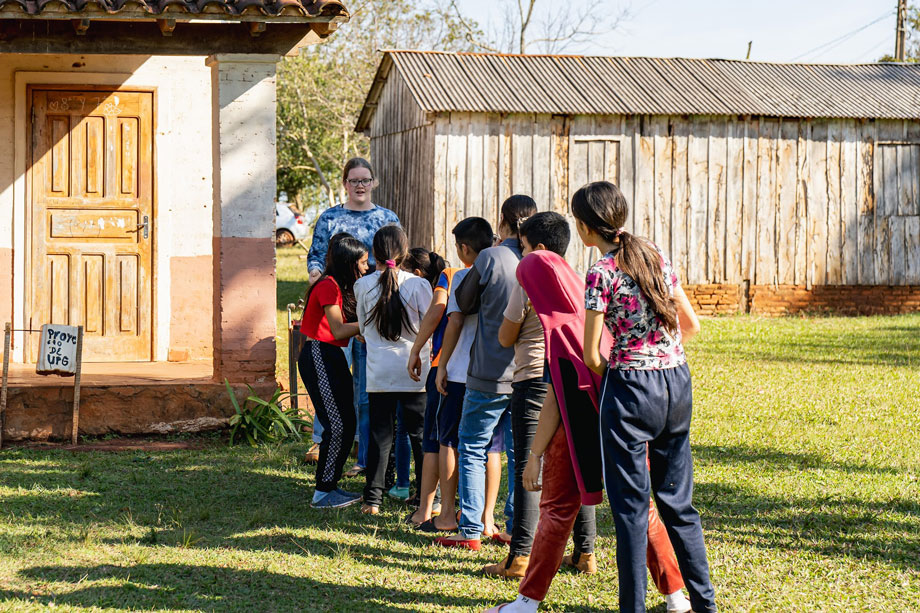
Even from my very first day in community, my host sister Valentina established herself as my community guide, stating, Yo te hablara en español. From then on, she helped me through every task, teaching me the best way to get stains out of my clothes (see section #4), teaching me new Guaraní phrases, and introducing me to every nine-year-old within a two mile radius. Coupled with the deep appreciation I had for her support was the other side of the sisterly experience. On quiet afternoons, Valentina and her three-year-old shadow Daniela found their favorite boredom buster, crawling all over me and exploring all the materials I had packed. Though the first few iterations of my “What’s In My Bag” tour were entertaining, it quickly became a hassle to reorganize all my belongings every afternoon. The minor irritations of our close relationship actually proved to be one of the more authentic representations of our sisterly dynamic.
AMIGOS’ emphasis on host family lodging presents a unique opportunity for volunteers to connect deeply to their host community and culture, experiencing authentic relationships and connections.
2. How cold Paraguayan winters are
Based on my personal research, I entered the Tierra Guaraní program thinking the 60-70°F Paraguayan winters would be a welcomed respite from the Bay Area’s harsh 60-70°F summers. You can imagine my surprise when my host family’s daily screenings of the morning news show Vive la vida reported the temperature as being 1°C. Though at that exact moment in time I was unable to calculate the exact temperature in Fahrenheit –and how much it deviated from the San Franciscan summer I had packed for– it became increasingly clear I was underprepared. What could’ve been the makings for 6 weeks of shivering and complaining actually became my earliest connections to Paraguayan culture.
As it turns out, I was not the only one surprised by this weather. In fact, this was one of the coldest winters my community had experienced in years. Almost every introduction I had to neighbors, community officials, and children at school included some sort of remark about the temperature or the number of layers we had to wear that day. Plus, the Michelin Man appearance of the kids at our daily recreos significantly lessened my anxiety about mid soccer game injuries.
Additionally, the community of San Francisco II’s bitter winter mornings connected me to the yerba mate culture. Though the time of day and meals we were preparing varied, one constant of my daily routine was the mate circles held with my host brother Delio’s Stanley guampa (yerba mate gourd) and termo (thermos). Though packing-for-AMIGOS-Evelyn may have benefited from an accurate forecast, the warmth I found in both my conversations with my community and the mate we drank.
3. How my experience would be enriched by every member of my host community
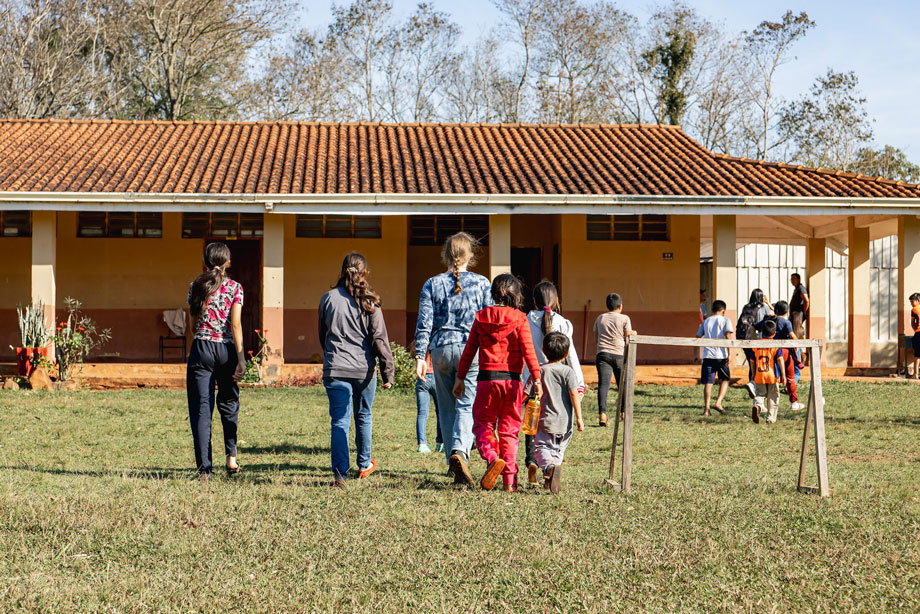
My early days in community consisted mostly of shadowing my host sister Valentina. When she woke up and went to feed the cows, I joined her. When she helped her mother with breakfast, I joined her. I sat through hours of dubbed cartoons and telenovela YouTube channels. I accepted every invite to partidos (soccer games) and to visit the almacen (market) to buy ingredients for dinner. Though these experiences laid a solid foundation and knowledge of the community, I wish I had known to reach deeper in the community earlier in my stay, expanding my cultural exposure past only nine-year-old girl interests.
In the second half of my trip, I learned how far my cultural worldview could expand when I engaged with more community members. Though I did not win any cash prizes at the school-hosted bingo night, I spoke with the parents of Escuela Basica Sagrada Familia which expanded my network. Later on in my trip, the families I sat next to at bingo were the very same families that came to work on the service project with me! The more time I spent in my community, the more evident it became that every individual was another opportunity for support and connection that would enrich my experience and leave me with beautiful memories and stories.
4. How pigmented the dirt of rural Paraguay is
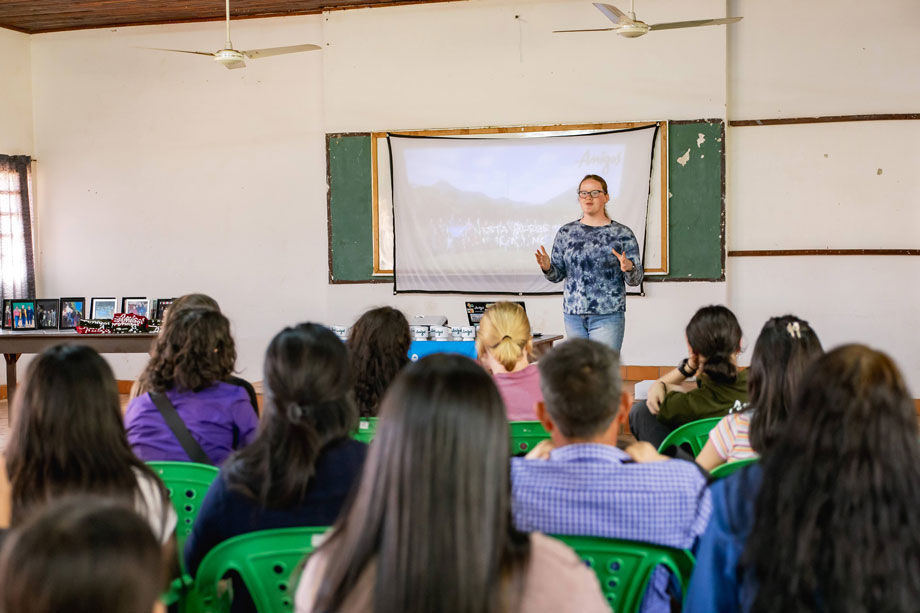
Before I left on my AMIGOS trip, I wish I had known how pigmented the Paraguayan dirt was, so I could have avoided some stubborn stains. Though my hours of training instructed me to bring clothes I did not care much about, I naively thought I could keep some clothes clean enough to bring back home to the U.S. without any issue. I was quickly humbled when even the first walk through community left dark red mud stains on the cuffs of my pants.
From then on, I had no choice but to embrace the stains as evidence of my experience. Every spot on the knees and seat of my jeans were marks from yet another intense game of pato, pato, ganso (duck, duck, goose). My no-longer-white-shoes were proof of the miles I had walked to and from countless recreos, community meetings, and partidos.
By the end of my trip, my host sister Valentina insisted I must scrub my clothes to avoid any snickering or snide remarks from the children. Though her effort was valiant, many of those socks and pants still bear remnants of San Francisco II. What she thought would be an embarrassment to display in public has actually become my own figurative scrapbook of all my memories.
5. How intercultural connection comes in the weirdest of forms
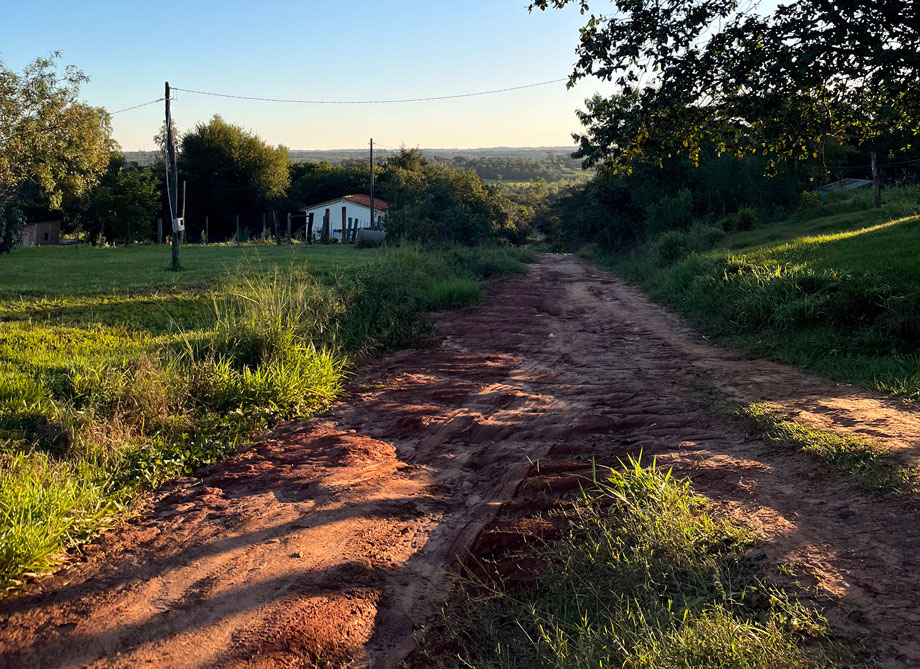
As a San Francisco Bay Area native, when I learned I was placed in a community called San Francisco II I was excited to share the coincidence and bond over our shared toponymy. However, when I arrived in community, I was surprised to find that my host family did not find the connection amusing, nor did they seem to be familiar with San Francisco, Los Angeles, Hollywood, or California as cultural centers. I laughed it off, chalking the whole misunderstanding up to differing pop culture and media exposure.
One day at recreo, a group of young boys ran up to me and excitedly asked if I was from the United States. I confirmed, trying again to reference my specific location and background to see if any of it stuck. They ignored my comments and continued asking their own followup questions including whether I knew Mr. Beast. From then on, the pop culture references that the children knew surprised me, ranging from Mr. Beast to Miraculous Ladybug to Italian Brainrot. But, after adjusting my references, these topics became a quick conversation starter and the foundation for a lot of inside jokes with local kids.
6. How impactful relationships with other volunteers can be
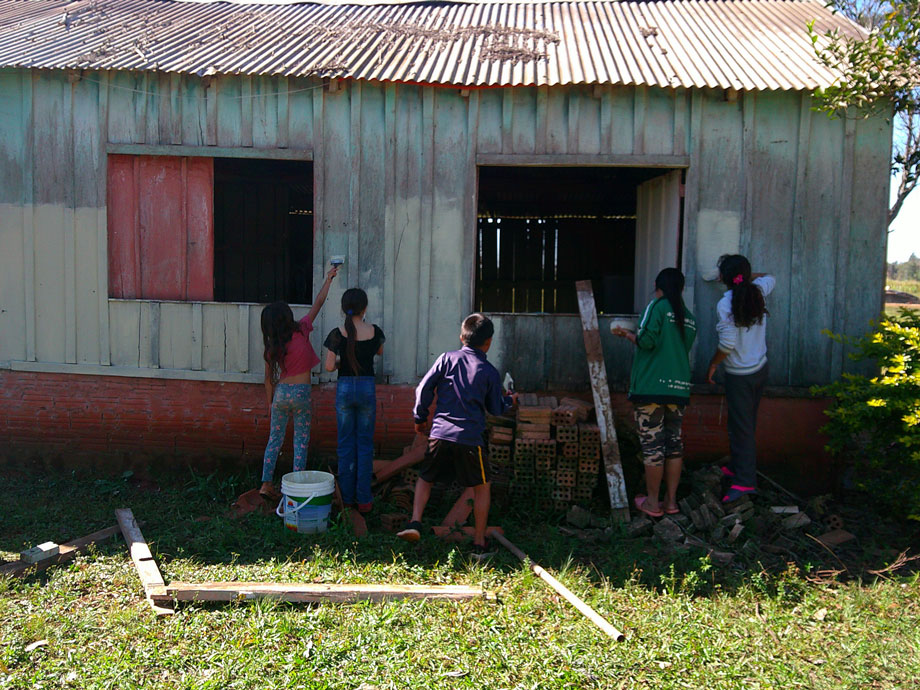
No amount of training nor our very first interactions at the Tocumen International Airport in Panama could have prepared me for the strength of the relationships I formed and how much I would rely on those later in my trip. The bond was clear even from our first days of briefing: whether it was our scavenger hunt through Villarrica, meals, or the briefing talent show, we always did it together.
This dynamic lasted through our placement in the community though they were tested with new circumstances such as using Guarani in our daily conversations. Even still, we faced the recreos and project planning paperwork side by side. The reliance I had on this in person support from my peers made my mid-program transitions that more jarring.
About half way through the trip, both of my community partners were removed from my community, leaving me alone to complete the service project. Though this challenge was one I took upon myself and I knew I had the support of project staff whenever I needed it, it was actually the lack of communication to my peers that was most difficult. It was noticeable in even the smallest interactions where the holes in my vocabulary were no longer filled by my volunteer partners and I had to use my clunky English-Spanish dictionary. And though I could no longer rely on their in person support in my conversations, we continued to communicate with one another by the only means available to us: letters.
Our Project Supervisors formed their own postal service, dropping off and delivering any letters, trinkets, and drawings. Not only did this quickly become the only time I could speak or write in English, it also was a bonding activity for me and the kids. Having heard stories about my peers and met my project supervisor, the recreo kids set to work on their own letters, asking questions and telling stories about our adventures in community.
Even now, months after my stay in Paraguay, I still have the letters and drawings I was given. They act as a physical representation of the network that was built around me in community, supporting me through every challenge.
7. How difficult it would be to say goodbye
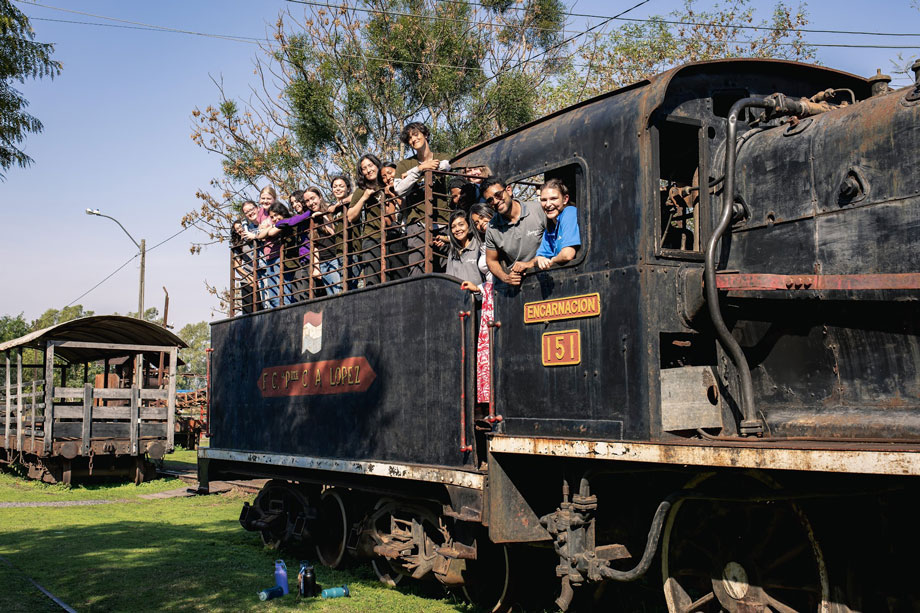
The final hours we spent together as the Tierra Guaraní 2025 cohort felt unreal. Though we couldn’t always rely on each other’s immediate presences during our trip, I had grown accustomed to the knowledge that they were only a letter away, all while knowing we could debrief our experiences at debriefing. That’s what made the final separation so intimidating. As all the other volunteers boarded their connecting flight to Houston, I watched as the conversation partners and support network I had built became unreachable.
Thankfully, I would soon find out that their United flight offered free in-flight wifi and I continued to text them for the next 8 hours of my layover. But the sudden change I experienced reflected a larger process of recalibration that I underwent when I returned to the US. The minute details of my time in community like my morning cocido with my host sister and our nightly screenings of Rápido y Furioso (Fast and Furious) and Son como niños (Grown Ups) grew into my fondest memories and most missed activities. I only realized how much I craved my host mother’s tortillitas and empanadas when I was wandering around the Panama City Airport searching for dinner.
At first the transition was hard and reminders of my trip were bittersweet. However, I’ve chosen to reframe my emotions, treating memories and photos as an opportunity to reconnect to my fellow volunteers and community members. In this way, I can choose to celebrate the experiences I’ve already had and make opportunities for new ones.
8. How in-country connections last past the program end date
Coincidentally, my first two days back in the United States with cell service were the Paraguayan holiday of Día de la amistad and my 17th birthday. Both of those mornings, I woke up very early to dozens of WhatsApp notifications from my nine-year old Paraguayan friends. They shared voice messages wishing me a happy birthday and AI-generated images of birthday cakes and fireworks. Our communication continued in the weeks after that, in fact I would occasionally be woken up with WhatsApp video call notifications from the kids when they were bored on their winter break.
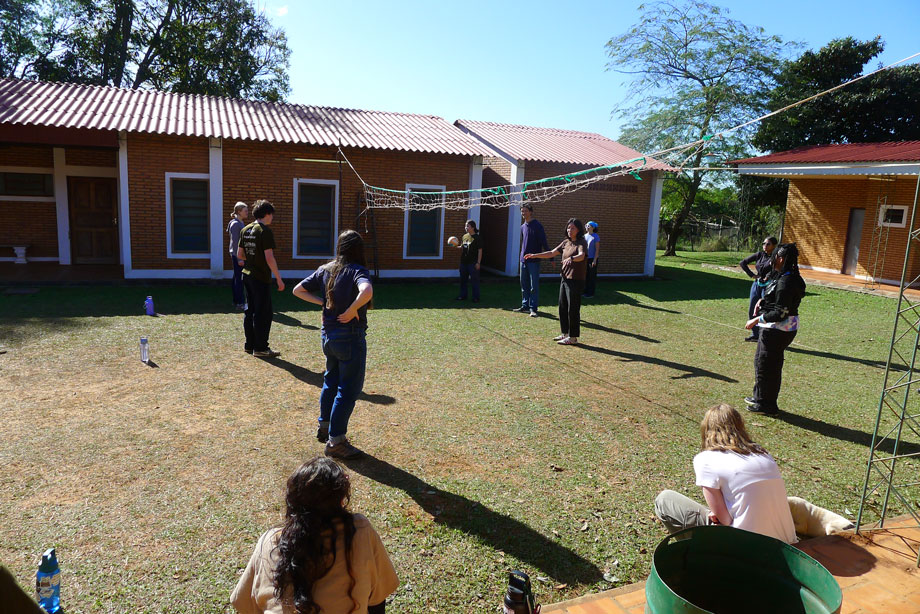
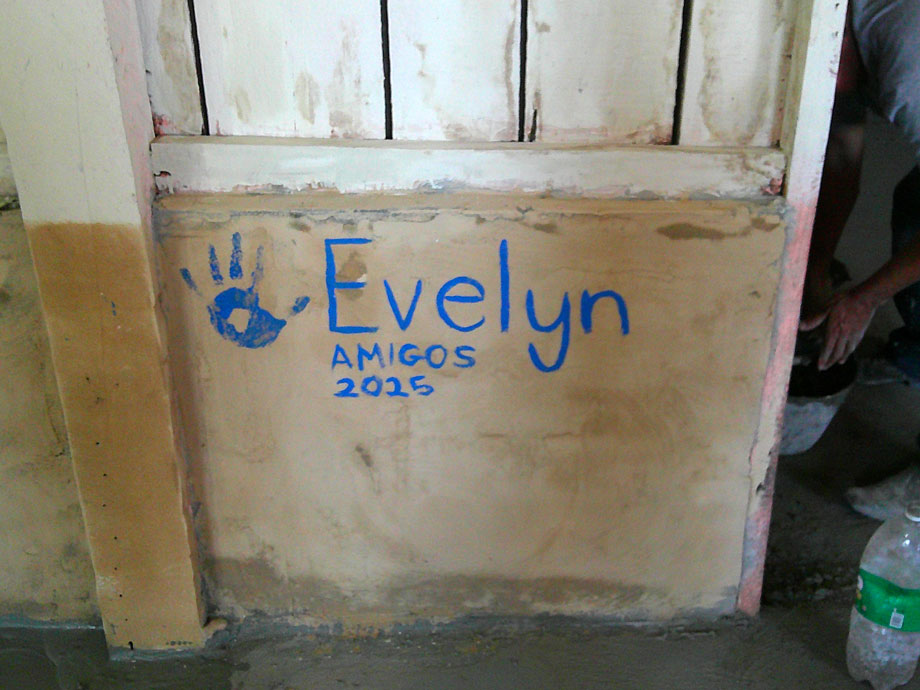
Even on quieter days without messages, I still keep in contact via WhatsApp status updates. Similar to Instagram’s “stories”, these posts give me a window into San Francisco II’s daily activities. From children’s birthday parties and school events hosted in the dining room I helped renovate to conversations shared over voice messages, my connection to my host community has continued to grow and adapt even after I left.
Though the tech-free policy seemed daunting at first, it allowed me to forge strong connections with my community members that I could continue to develop once I got my phone back.
9. How many opportunities there are to keep working with AMIGOS as an organization
Even through my completion of the program, I felt that I was working toward a goal. During my training, it was completing the activity in front of me and preparing myself for my program. And once we got into community, the goal was to coordinate with local leaders in order to complete the service project project. The satisfaction of achieving these goals and completing the program eventually faded, leaving me with a passion and excitement for service without a clear outlet.
It was then that I was introduced to other ways to interact with AMIGOS. I learned of the Social Impact Accelerator, a free, virtual community service program that provides students across the Americas with resources and support as they complete their own service project. I’ve reconnected with AMIGOS through the Alumni Ambassador program. In every interaction with AMIGOS alumni –ranging from the staff to the attendees at the Adelante Benefit– it is clear that an AMIGOS experience is unforgettable. I have heard countless stories of alums whose experiences connected them to life-long friends, a passion for service and even a second family in another country. It is this kind of immeasurable impact that encourages me to continue with my participation with AMIGOS and encourages those around me to do the same.
It is clear an AMIGOS experience lasts far beyond the program end date. Whether the trip introduces you to a new community of volunteers, an additional family in country, or a passion for service and culture, it is undeniable that AMIGOS makes a lifelong impact.
10. How I can carry my experience with me back to the U.S.
Before I went on my trip, my knowledge of Paraguayan history and culture was extremely limited. In fact, I am not sure if I even knew the capital of the country. However, my experience in country has forever attached me to my community and encouraged me to share my experiences with my own family.
During my time in community, I have very fond memories of cooking and eating with my nine-year old host sister Valentina. A couple of foods in particular feel particularly emblematic of my trip, boiled yucca, dulce de leche, and yerba mate. Every meal, without fail, was served with a colander of madioca (Guarani for yucca). In fact, it genuinely became one of my favorite meals. Once I returned to the US, I searched high and low for yucca roots. Eventually I found it and served it with the traditional Paraguayan cornbread sopa paraguaya. Though the meal had a much deeper nostalgic value for me than my parents, I was excited to share the recipes I had learned.
Another Tierra Guaraní briefing staple was dulce de leche. Every day at breakfast we were given a plate with a large glob of the sweet caramel-y spread. Once we ran out of bread to spread it on, we ate it on bananas, savory crackers, and pretty much anything we could get our hands on. Thankfully, dulce de leche is much more easily accessible in the US, giving me an easy outlet whenever I need culinary reminders of my trip.
Finally, easily the most emblematic Paraguayan experience of them all: yerba mate, and more specifically terere. Though yerba mate is common in many South American countries such as Argentina and Brazil, terere is a variation of the drink signature to Paraguay. Instead of being served with hot water, terere is a mintier blend of yerba mate served with ice water, designed to be refreshing even through the triple-digit degree summers. Even the consumption of mate is an important cultural practice. Many of my project planning meetings and evening screenings of Adam Sandler movies were held in a mate circle. I was excited to share this experience with my family. In fact, my only souvenir priority was to buy a guampa (mate gourd) and bombilla (filtered straw).
Though I have yet to find a yerba mate brand that rivals the ones served to me in Paraguay, the practice of yerba mate as well as other foods and activities have continued my connection to my community.
